

What We’re Reading: March Edition
March’s reading roundup is focusing on research of note. These studies bring interesting light to our conversations on democracy, the Trump Administration’s ICE policies and the impact of religion on moral decisions. You are invited to read, reflect and enter into the conversation as we process what we are learning (click on the article title to read).
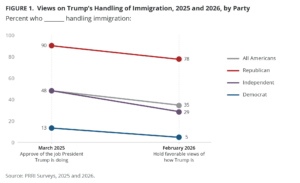 PPRI: Immigration Enforcement, ICE, and Civil Liberties in the Second Trump Administration
“Strong majorities of Christian nationalism Adherents (70%) and Sympathizers (60%) view Trump’s handling of immigration favorably. Only one in three Skeptics (32%) lean more favorable while Rejecters are overwhelmingly opposed: Just 8% express favorable views, while more than nine in ten view Trump’s handling of immigration unfavorably (91%).”
Pew Research: What Do Americans Consider Immoral
“Overall, 47% of Americans see other Americans as morally good, while 53% say the morality and ethics of their fellow Americans are somewhat or very bad. (By contrast, in nearly all the other countries where we asked this question in 2025, more people view their fellow citizens as morally and ethically good than as bad.)”
Graphs about Religion: The Confederate Flag Divides America — But Not How You’d Think
The data is crystal clear on this point: younger Americans are much more likely to say that the Confederate flag is a symbol of racism compared to their older counterparts. In the full sample, just 39% of 18-29 year olds chose the “Southern Pride” option compared to about 60% of respondents who were 45 or older. So, there’s definitely a generational difference in this data.
Bright Line Watch: The Persistence of Diminished Democracy in a Second Trump Presidency
“Expert ratings of U.S. democracy have largely stabilized at lower levels than any prior period since our data begin in 2017. During Donald Trump’s first term and Joe Biden’s presidency, ratings among experts never fell below 60 or exceeded 70 on a 0–100 scale. However, they fell sharply in the first months of Trump’s second presidency, reaching a new low of 53 in April 2025. They remained statistically unchanged at 54 in September 2025 before increasing to 60 in the initial expert ratings collected in our December 2025–January 2026 survey. This rating, which exceeded previous forecasts, may have reflected the effective contestation of off-year elections in November 2025.”
Comments are closed.