

Embracing Power for Transformational Change
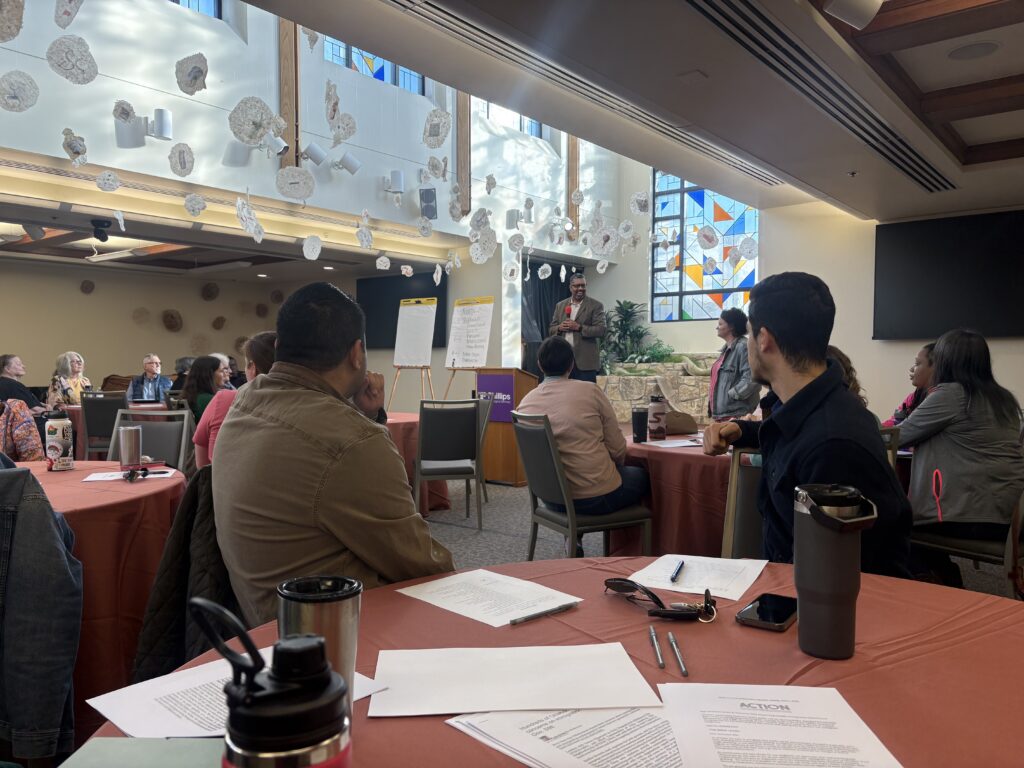
President F. Douglas Powe Jr. speaks to the Action Tulsa community group in the seminary’s Meinders Chapel.
On Feb. 7, I had the opportunity to attend an engaging community organizing training hosted by Action Tulsa. Their team of trainers encouraged us to find ways that the organizations in Oklahoma, as well as around the country, could come together around faith-based organizing. At a time when the world needs people stepping up to challenge injustice, it is good to be in a room packed with people who are willing to do just that.
Able Thompson, lead organizer with Together Baton Rouge, sparked a fascinating conversation on how broad-based organizing must engage with power. What made the conversation so engaging was the struggle for participants to wrap their heads around a neutral definition of power. As Thompson shared, “power is the capacity and ability to act.”
One of the interesting things that I noticed in a discussion about power is that people went straight to images of power that are about coercion and control. The dominant image of power that came to mind for many participants was a power that leads to corruption.
With all of the things happening in the world right now. Bayard Rustin reminds us, “there is a strong moralistic strain in the civil rights movement that would remind us that power corrupts, forgetting that the absence of power also corrupts.” To help people claim a framework of power, it may be helpful for our image of power to shift. Scripture gives us text after text of an important conversation about power. Especially in the example of the incarnation.
Christ’s power, or kenosis in theological terminology, is a framework of power that is helpful to me as I think about my role in community organizing. The love that Christ displayed was grounded in love, grace, and service. He spoke to power, he fought injustice, and brought healing and restoration to both individuals and communities.
Jesus invited his disciples to share in this power. As he was teaching and serving, he called his disciples to participate in these activities of service, reconciliation, and community building. And he promises that after he has physically left them, power will be given to them through the gift of the Spirit.
This is an image of power that helps me wrap my head around the work of community organizing. It is not a power that corrupts or coerces; it is a power that transforms. It is a power grounded in love and grace, healing and hope. It is a power that connects us to Christ and to one another. This power calls us to be at work in fighting injustice and transforming the world.
It is a definition of power that is needed right now, and we are invited to embrace it.
Comments are closed.