

Introducing Trista Soendker Nicholson, Interim Director
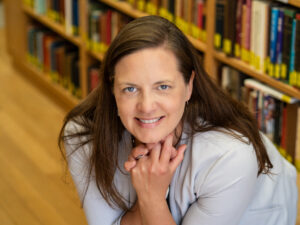
The Rev. Trista Soendker Nicholson
Hi, I am Trista.
I am delighted to be joining the team at Phillips Theological Seminary’s Center for Religion in Public Life. I am currently serving as the center’s interim director, and am completing my PhD work in public theology with Wesley House in Cambridge, UK.
Prior to my work in academia, I served as pastor of United Methodist Churches in Missouri, and I also worked in public service and political roles in Washington, DC. I am excited to be engaging in this important work at Phillips.
As I begin my tenure and continue the important work started by Gary Peluso-Verdend, I found myself re-reading some of his posts. Those posts continue to resonate as if they were written for today. In 2026, we continue to become what we attend to and we continue to face the tragic consequences of racism and dehumanization. We continue to face systems of oppression, violence, and injustice.
On the outside of the Greenwood Rising museum is a challenging quote by James Baldwin, “not everything that is faced can be changed, but nothing can be changed until it is faced.” We cannot change the reality of today without facing (and owning) our past harms. This is true for both faith and politics. As a nation, we need to confront both the Church and our history.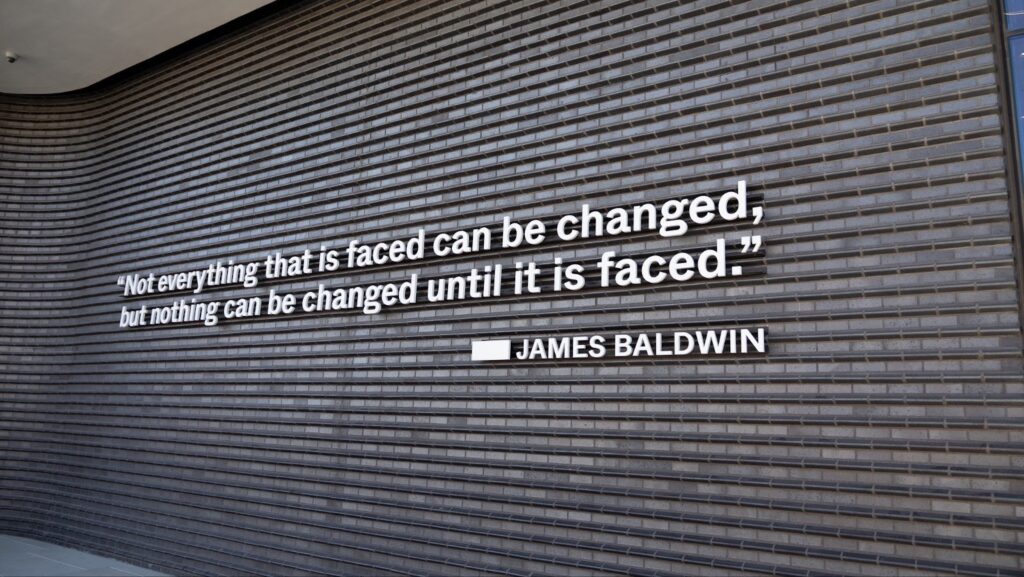
With everything that is unfolding around us, it can be difficult to step back and take the time for the longer view of history. How do you confront historical harm when the house is on fire right now? How do you challenge, in Gary’s words, “the dominant American myth (deep, defining story),” while people are being killed in the name of a White Christian Nationalist version of manifest destiny? Is it possible to do both?
As a public theologian, I believe it is important to bring together various theological disciplines to confront what has happened in the past and to change the reality of today. We need to approach these issues as we evaluate the scriptures, as we wrestle with social ethics, and work on caring and listening to one another. These disciplines help us to confront the past in order to transform the reality of today.
I believe that Phillips is in a unique position to engage this work of public theology. Alums are already engaging in these actions as they live out their calls to ministry. Faculty members bring their expertise into conversations with one another to help shape the public witness of the church. Congregations are engaged not only in serving their local communities but in seeking to be a part of the transformation of the wider world.
Our location in the heart of the United States gives us a strategic advantage for bringing diverse voices together while remaining committed to being a progressive theological voice. With our new Bedford House, there are unlimited opportunities for training and political dialogue.
The center’s work will provide resources to both pastors and laity to engage together in the work of public theology. This blog will seek stories of those who are engaged in this work, both confronting the wrongs of the past and highlighting those who are doing the work of dismantling systems of oppression and injustice right now. Sharing our stories provides hope and help in this vital work.
We will share resources and best practices to help you as a public theologian, and we want to hear how you are helping to confront the past and to change the world today.
I hope you will join us as we explore the ways God is calling us to use our gifts to engage in public theology. I look forward to connecting with you through this blog, our podcasts, public events, and in other ways over the coming months.
Comments are closed.